
Persona 03 · Buyer
Laura, the founding CTO
Player-coach CTO of a 10-40 person startup buying leverage instead of an SRE hire.
- Archetype
- Exec (founding CTO / VP Engineering)
- Pronouns
- she/her
- Typical plan
- Team ($200)
“Every incident costs me two engineers for a day and me for an evening. I can't hire my way out of that yet.”
The pain
- 1
Incidents burn engineer attention
The scarcest resource in the company, spent unplanned and concentrated on the seniors, one of whom is her.
- 2
No leverage on operations
Process slows the team, headcount is not approved, and doing nothing keeps her the escalation point.
- 3
Reliability is invisible
Between incidents, nothing tells her whether production is drifting or how exposed the team is.
The aha moment
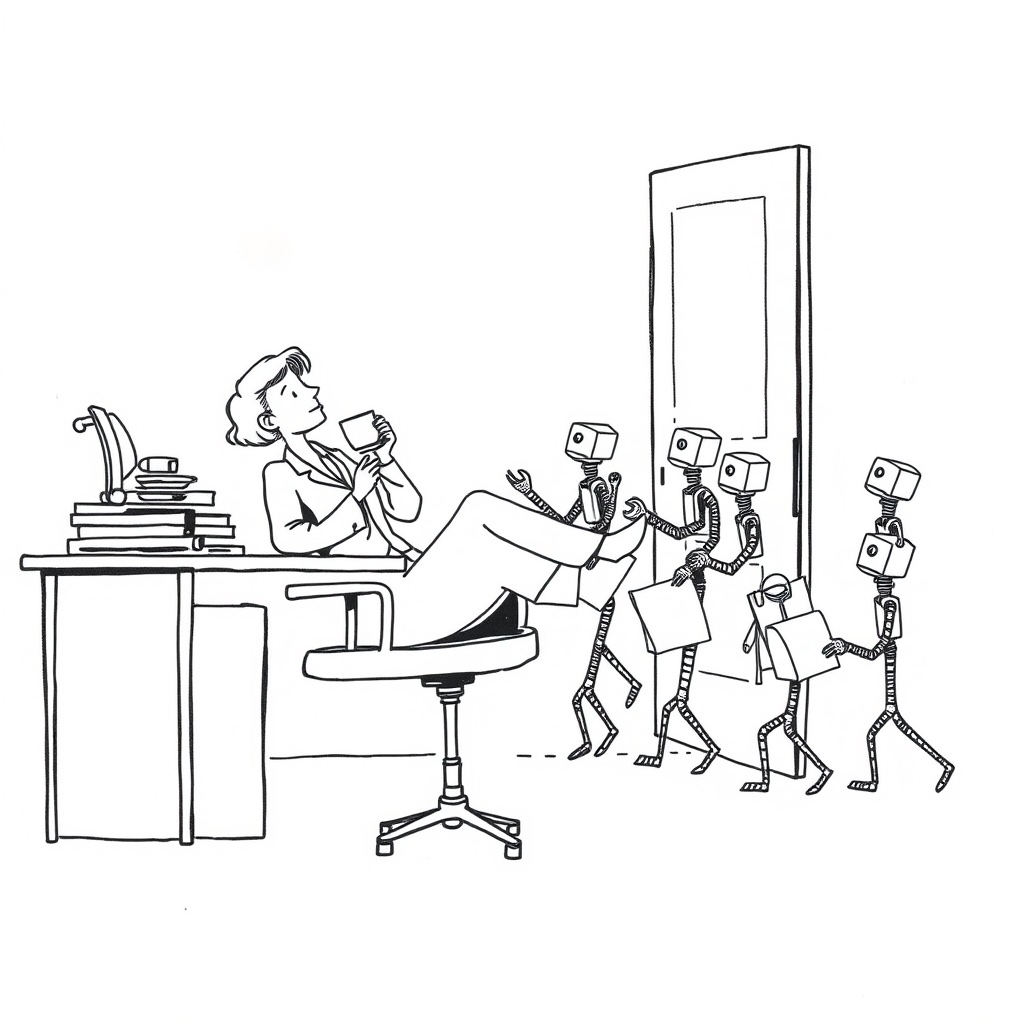
The morning she reads about last night's incident like news from a department she doesn't have to run: found, fixed, written up, and nobody asked her anything.
How we make them anticipate it
- Sell the feeling of an engineering org one size bigger: production has staff now, and none of it reports to her.
- Frame everything in engineer attention: interruptions avoided, evenings returned, 'nobody had to look'.
- Tell the 3am story from the CTO's side: not the outage, the phone that never rang.
Snapshot
| Fact | Detail |
|---|---|
| Age | 32-45 |
| Role | Founding CTO or first VP Engineering; still writes code weekly, the calendar disagrees |
| Company | 10-40 person startup, Series A or approaching it |
| Team size | 5-20 engineers, no SRE among them |
| Owns | Reliability, security posture, cloud spend, hiring, the tooling budget |
| Tell | The escalation point: when nobody knows what is wrong, they call Laura |
A day in her life
Back-to-back until 3pm: hiring pipeline, a board-prep doc, a vendor renewal, one architecture review she refuses to give up. Keeps a terminal open all day as an act of identity. Slack is triaged in the gaps; the #incidents channel has its own notification sound and her stomach knows it. Evenings alternate between family time and the deep work she could not get to, and an incident does not respect either. Twice a quarter she does the math on hiring an SRE, and twice a quarter the roadmap wins.

Stack and situation
| Tool | Why it is there |
|---|---|
 TypeScript / TypeScript /  Python / Python /  Go Go | The languages the team ships, in that order |
 GitHub GitHub | Source of truth; like everything else, whatever the team shipped fastest on |
 Vercel Vercel | The frontend surface |
 Cloudflare Cloudflare | Edge pieces adopted one product team at a time |
 AWS AWS | The parts that predate taste |
 Kubernetes Kubernetes | A small managed cluster nobody loves |
 Terraform Terraform | For the AWS half, half-heartedly |
 Sentry Sentry | Errors |
 Datadog Datadog | The bill she renegotiates every year |
 Slack Slack | Where the company happens, incidents included |
 Stripe Stripe | Revenue |
 Linear / Linear /  Jira Jira | Tickets |
 Notion Notion | Docs, runbooks, and the stale wiki |
 Claude / Claude /  OpenAI OpenAI | The team's agents and the product's features |
 1Password 1Password | Secrets, shared the responsible way |
 PagerDuty PagerDuty | The rotation they keep meaning to set up properly |
The rest of the situation, in three lines:
- Institutional knowledge lives in three heads and a stale Notion page; the person who understands the queue architecture is on holiday in August.
- There is no SRE and no plan to hire one this year; reliability is a tax paid by the two or three senior engineers, one of whom is her.
- Alerting either screams or stays silent; nobody trusts it, so everything escalates upward.
Goals and motivations
- Buy leverage, not headcount: something that does the first hour of every investigation before a human is interrupted.
- Get the team out of her DMs: fewer "is this normal?" pings to her, more questions answered by a system with the context.
- Turn institutional knowledge into an asset that survives departures: runbooks and tribal knowledge captured where they get applied automatically.
- A defensible reliability story for the board and for enterprise customers' security questionnaires, without building a compliance program yet.
- Predictable spend: flat price, visible usage, a hard cap on overage.
Where she hangs out
| Where | What it is to them |
|---|---|
| LinkedIn and X | LinkedIn for the professional graph and hiring, X for the technical and founder conversation; reads daily, posts occasionally |
| Private leadership communities | Rands Leadership, CTO Craft, LeadDev, her accelerator's founder groups |
| A WhatsApp group of five CTO friends | Outperforms every community above |
| Hacker News | Read with breakfast, comment drafted and deleted |
| Newsletters | The Pragmatic Engineer as the anchor; Lenny's for the product half of her brain; TLDR; AI newsletters skimmed defensively |
| Podcasts | Engineering-leadership and founder shows on the commute or run |
| Engineering blogs | Stripe, Cloudflare, Fly.io, Linear postmortems, forwarded to the team when good |
In person: LeadDev once a year, local CTO dinners attended selectively (she knows exactly what the vendor-hosted ones are), her investors' portfolio events.
How to reach her
| What works | Why it lands |
|---|---|
| Bottom-up through her engineers | Max showing her a PR verdict that was right, plus a usage page that explains itself; she approves what the team already loves |
| Founder-to-founder trust | An authentic narrative, honest technical writing, a visible human; she replies to the check-in email when it reads like a person wrote it |
| The weekly digest as a forwardable artifact | If it reads like a status report she can send her cofounder, it sells itself upward |
| Warm intros | Investor and CTO networks; case studies from companies one stage ahead of hers |
| Security documentation she can skim in ten minutes | Then forward to the one engineer who will actually read it |
What fails: cold outbound of any kind (she gets forty a week and has a filter for the word "streamline"), ROI calculators and feature matrices (she trusts her engineers' judgment over any comparison page), and enterprise theater (badges, analyst quadrants, walls of logos she has never met).
What she resonates with
- Leverage narratives: small teams that punch above their weight because their tools do real work. The idea of agents doing the first hour of investigation is exactly the hire she cannot make.
- "Engineer attention is the scarcest resource" framing; she has said versions of this sentence in board meetings.
- Opinionated, restrained products in the Linear mold. She reads product taste as a proxy for engineering quality.
- Guardrails as first-class features: read-only by default, writes gated, code changes only ever as pull requests through CI and review. Autonomy she can dial, not autonomy she has to trust blindly.
- Honest pricing: flat monthly, usage visible, overage capped. She has been burned by observability bills before.
What turns her off: black-box AI claims, per-seat pricing that punishes growing the team, tools that require a services engagement to adopt, anything that positions itself as replacing her engineers rather than multiplying them.
Hobbies and personality
- Running or cycling with the discipline of someone who calendars it; a half-marathon or a century ride once a year as proof of control over something.
- Reading split between management books she is skeptical of and science fiction she is not. Chess or crosswords on the phone in queues.
- Family logistics consume most non-work hours; the hobby she misses most is the side project she has not touched in two years.
- Dabbles in angel investing or advising one or two startups, mostly for the deal flow of ideas.
- Personality: decisive, warm but time-boxed, allergic to hype, protective of the team. Buys fast when trust is established and churns quietly but permanently when it is broken.
Journey through the product
Adoption precedes purchase, always. The decisive moment is not a demo; it is the evening she spends configuring guardrails and deciding whether the product respects her.
Her recurring surfaces after the purchase: the weekly digest, the feed as an audit trail, the usage page when the 70% credit warning lands, and the incident threads she reads after the fact to judge the quality of what she bought.
Feature affinities
- The weekly digest as the reliability status report she forwards to her cofounder.
- Memories and skills as durable institutional knowledge: the queue architecture explanation finally lives somewhere that gets applied, not just stored.
- Incident caps and investigation-depth settings: the dial between coverage and credit burn is a budget instrument to her.
- Member roles and granular permissions; domain auto-join for zero-friction team growth.
- Thread watches for the recurring toil: watch this migration, summarize deploys to Slack, babysit the infrastructure change over the weekend.
Objections and friction
- The security review, even informal: what exactly can this write, where does telemetry live, what happens when it is wrong. Read-only defaults, gated writes, and PR-only code changes are the answers she needs to find within ten minutes.
- Credit legibility: she will ask what a credit is and whether the finance model survives contact with her spreadsheet. Cost-weighted tokens with a capped overage does survive it, but only if explained plainly.
- The quiet-month problem: if no incidents happened and the digest is thin, she wonders what she is paying for. Advisories, change analysis, and risk findings between incidents are what keep the renewal safe.
- Vendor-dependence worry: she asks what happens if she disconnects, and respects products that answer honestly.
What success looks like
- Incidents arrive at her team pre-investigated; the timeline shows the first hour was already done. Her senior engineers get interrupted half as often.
- The team asks Polylane in Slack instead of DMing her. This is the metric she feels personally.
- The digest becomes a standing section in her weekly leadership update, and the board stops asking whether reliability is under control because the answer is visibly yes.
In their own words
- "I can't hire an SRE this year. I need the output of one anyway."
- "Show me the guardrails first, then the magic."
- "If my engineers love it and the invoice is predictable, this is the easiest yes I'll give this quarter."
- "The tool that gets my team out of my DMs is worth more than the one that gives me another dashboard."