
Persona 02 · Core
Max, the product engineer
Full-stack engineer at a small startup, ships daily with a coding agent, dreads the pager.
- Archetype
- Software engineer at a small startup
- Pronouns
- he/him
- Typical plan
- Max ($200) or a seat on Team
“I merged at 5pm, Sentry lit up at 6, and I spent the evening tab-hopping between five dashboards trying to work out which of the three deploys did it.”
The pain
- 1
Most of his time is not building
Investigation, context reconstruction, and interruptions eat the week, and it is getting worse.
- 2
Five tabs per incident
Errors, logs, deploys, the diff, and Slack, and none of them can see each other.
- 3
Merge anxiety
He learns a change hurt production an hour after merging, from Sentry, not at review time.
The aha moment
A PR comment that says "this will break production", and is right, on his own code, inside his own workflow.
How we make them anticipate it
- Show the PR comment surface in every demo and screenshot; to him, it is the product.
- Lead docs and launch content with the question he already asks: what will this branch do to production?
- On first connect, route him to open a pull request within minutes, so the first verdict arrives while the tab is still open.
Snapshot
| Fact | Detail |
|---|---|
| Age | 20-34 |
| Role | Junior to senior full-stack engineer, shipping across the whole stack |
| Company | 5-15 person startup, seed to Series A |
| Team size | 3-8 engineers, no dedicated ops; production is everyone's job |
| On-call | Informal: whoever saw the alert first, and it is always Max |
| Location | Hybrid or remote from a hub city: SF, London, Berlin, Toronto, Bangalore |
| Tell | Rarely the first adopter, heaviest user within a month; the agent wrote half of every PR |
A day in his life
Standup, then headphones on. Ships a PR before lunch, reviews two more, unblocks a teammate in Slack. The interruptions are the story: a Sentry spike that turns out to be nothing, a customer report that turns out to be something, twenty minutes reconstructing what changed on the day the latency graph bent. Evenings are usually his unless it is his unofficial week, in which case his phone sits face-up on the dinner table. His private metric is uninterrupted hours, and he counts them.

Stack and tools
| Tool | The job it does |
|---|---|
 TypeScript / TypeScript /  Python Python | TypeScript across the stack; Python wherever data or AI lives |
 GitHub GitHub | Code, reviews, and the CI he mostly trusts |
 Vercel Vercel | The frontend |
 Cloudflare Cloudflare | Workers behind the APIs |
 Fly.io / Fly.io /  Render Render | The one service that needed a real box |
 PlanetScale PlanetScale | Or Postgres, depending on who set it up |
 Upstash Upstash | Redis, somewhere, doing something important |
 Sentry Sentry | Errors: the first tab of every incident |
 Axiom / Axiom /  Honeycomb Honeycomb | The log vendor only two people can query well, and he is not one of them |
 Datadog Datadog | At the last job; he still has opinions |
 Slack Slack | The operating system of the company; incidents happen in a channel, not in a tool |
 Claude Code / Claude Code /  Cursor Cursor | In the editor all day |
 OpenAI OpenAI | The features he ships are increasingly built on it |
 Linear Linear | Tickets |
 Figma Figma | Tabs he did not choose |
 Notion Notion | The wiki everyone means to update |
Goals and motivations
- Protect his maker time. Every tool is judged by interruptions removed minus interruptions added.
- Know the production impact of a change before merge, not after.
- Get answers about production without leaving the editor or learning another query language.
- Be seen as the engineer who ships fast and does not break things, without becoming the de facto ops person.
Where he hangs out
| Where | What it is to them |
|---|---|
| GitHub | Source, issues, and PRs of dependencies: his actual social network |
| X/Twitter and Hacker News | Dev circles, more reader than poster; almost never comments |
| Framework and tool Discords | Next.js, Cursor forum, Claude Code discussions, whatever the stack demands this quarter |
| r/ExperiencedDevs | Mostly to confirm everyone else's standup is also broken |
| Team Slack | Where he actually discovers tools: someone pastes a link and says "this is good" |
| Newsletters | TLDR, Bytes, Pointer, one framework newsletter |
| YouTube and podcasts | Theo, ThePrimeagen, Fireship, conference talks at 1.5x; Syntax and JS Party on the commute |
He reads the changelogs of tools he likes for fun, which he knows is a personality trait. In person: a local meetup a few times a year, one conference if the company pays, hallway track over talks.
How to reach him
| What works | Why it lands |
|---|---|
| The product inside his workflow | The PR comment and check run are the ad; one correct "this will break production" verdict converts him better than any campaign |
| Word of mouth in team Slack | The highest-trust channel that exists for him |
| Coding-agent ecosystems | MCP directories, editor-integration showcases, "works with the agent you already use" framing |
| Demo-driven dev content | Newsletters and the YouTube circuit, showing the editor-to-production loop |
| Excellent docs | He reads docs before landing pages, and judges the product by them |
What fails: webinars, gated content, and sales calls (he has never booked a demo in his life), LinkedIn outreach (checked twice a year), and feature-checklist comparisons against Datadog (he does not own that budget and does not care).
What he resonates with
- Craft and developer experience: keyboard-first, fast, dense. Linear is the reference product; he will forgive missing features before he forgives slowness.
- Tools that do the work instead of giving him another place to look. "The agent queries the logs so you don't learn another query language" is precisely his wish.
- Respect for his attention: one comment per PR that updates in place beats ten comments; silence when there is nothing to say.
- Evidence over claims: show the investigation trail, the hypotheses, the log lines. He trusts receipts, not confidence.
- Craftsmanship in copy: precise, unhyped, a little dry.
What turns him off: bots that spam PRs, AI sparkle-branding, dashboards with forty widgets, anything that adds a mandatory process step, tools that message him more than his teammates do.
Hobbies and personality
- Bouldering or running; the climbing-gym-to-engineer pipeline is real in his office.
- Cooking seriously on weekends, gaming (roguelikes and co-op with old friends), live music, a mechanical keyboard he over-researched.
- Side project in a permanently 80%-done state, which he is at peace with.
- Personality: pragmatic, quietly opinionated, high standards, low drama. Skeptical of new tools for a week, then either uninstalls or evangelizes. The team's informal tooling gatekeeper: if Max adopts it, the team follows.
Journey through the product
He never chooses the product; it shows up on his pull request. Everything depends on that first verdict being right.
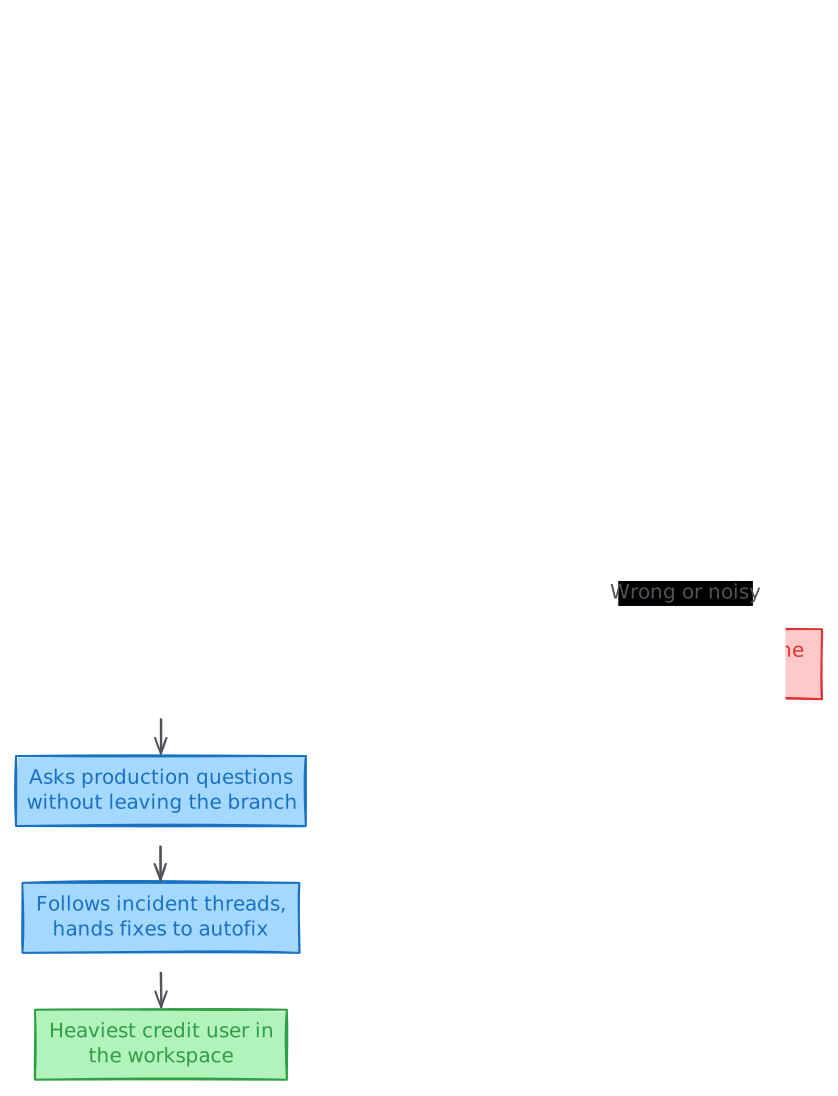
The details matter to him at every step: docs-only PRs pass instantly (he notices), the comment updates in place instead of stacking, and incident threads arrive with the hypotheses that were tested and ruled out. He takes the diagnosis and fixes it himself, or hands it to autofix and reviews the PR.
Feature affinities
- PR change intelligence: the verdict on every pull request, in the tool he already lives in.
- MCP in the editor, read scope first; he enables writes only after seeing the confirmation gate work.
- @Polylane in Slack, and spinning an investigation off any message in the incident channel.
- Incident threads with the evidence trail: hypotheses tested, confidence, what was ruled out.
- Autofix with the team's existing coding agent as the executor.
Objections and friction
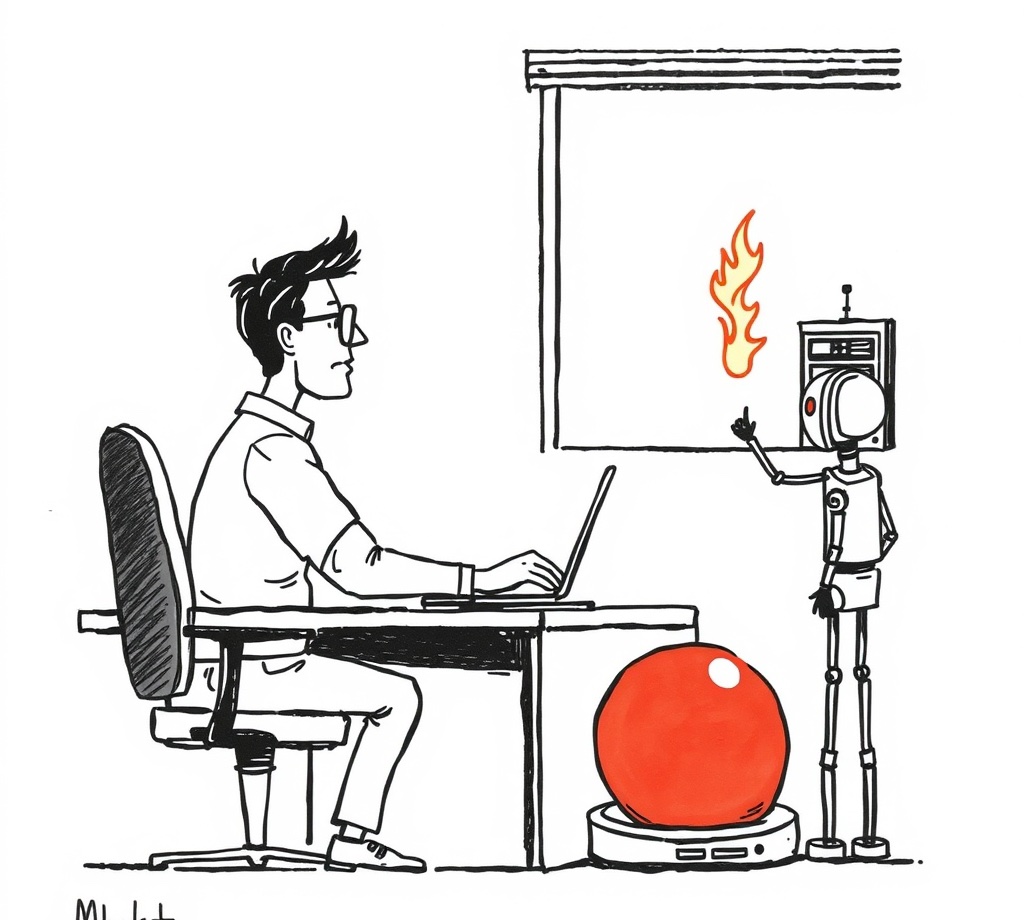
- "Another bot on my PRs": tolerance is one useful comment. The first wrong or noisy verdict and he disables reviews for the repo, and tells the team.
- Write access skepticism: reads-by-default with explicit per-action confirmation is what wins him over, and he will test the gate deliberately.
- He will not learn another dashboard, another query language, or another place to check. The product has to come to his surfaces: GitHub, Slack, the editor.
Money and plan behavior
- Rides a seat on the company's Team plan; he influences the purchase but does not make it. His demo to the CTO is a screenshot of a PR verdict that was right.
- On side projects he is the Max buyer profile: single seat, high usage, wants the priority frontier-model routing.
What success looks like
- A PR he was about to merge gets a fail verdict citing the exact production resource it would have broken, with reasoning one click away. He screenshots it into Slack.
- His uninterrupted-hours count goes up, and the same two people stop being the ones who always see the alert first.
In their own words
- "I don't want another dashboard. I want the answer where I already am."
- "If it comments on my PR it had better be right."
- "Show me what you checked, not just what you concluded."
- "The 3am me will forgive a lot. The 10am me will not forgive noise."